

Did you know there is a temple in Kashmir that is surrounded by a natural spring whose water changes colour? This is the famous Kheer Bhawani temple located in Tulamulla village near Srinagar, Kashmir.
This sacred shrine is dedicated to Goddess Ragnya, also known as Kheer Bhawani, who is believed to be an incarnation of Goddess Durga. The temple got its unique name from the famous Indian dessert kheer, which is the main offering made to the goddess by devotees.
At the centre of the temple, there is a small marble shrine surrounded by a sacred hexagonal spring. According to local beliefs, the colour of the spring changes from time to time and is believed to predict future events.
Who Is Goddess Kheer Bhawani?
According to Hindu mythology, Goddess Kheer Bhawani, also known as Goddess Ragnya, is regarded as an incarnation of the Goddess Durga.
A popular legend states that the goddess was once worshipped in Lanka by King Ravana in her Vaishnavi form. Pleased by his devotion, she blessed him with all kinds of prosperity. It is believed that Ravana used to offer her rice pudding as naivedya.
However, as Ravana gradually moved towards the path of adharma, he started doing unlawful practices. Getting displeased by his acts, the goddess instructed Lord Hanuman to shift her to the Kashmir Valley, where she chose the sacred spring at Tulamulla as her abode.
Another local belief says that 360 nagas (serpents) accompanied the goddess and continue to spiritually protect the sacred spring surrounding the temple.
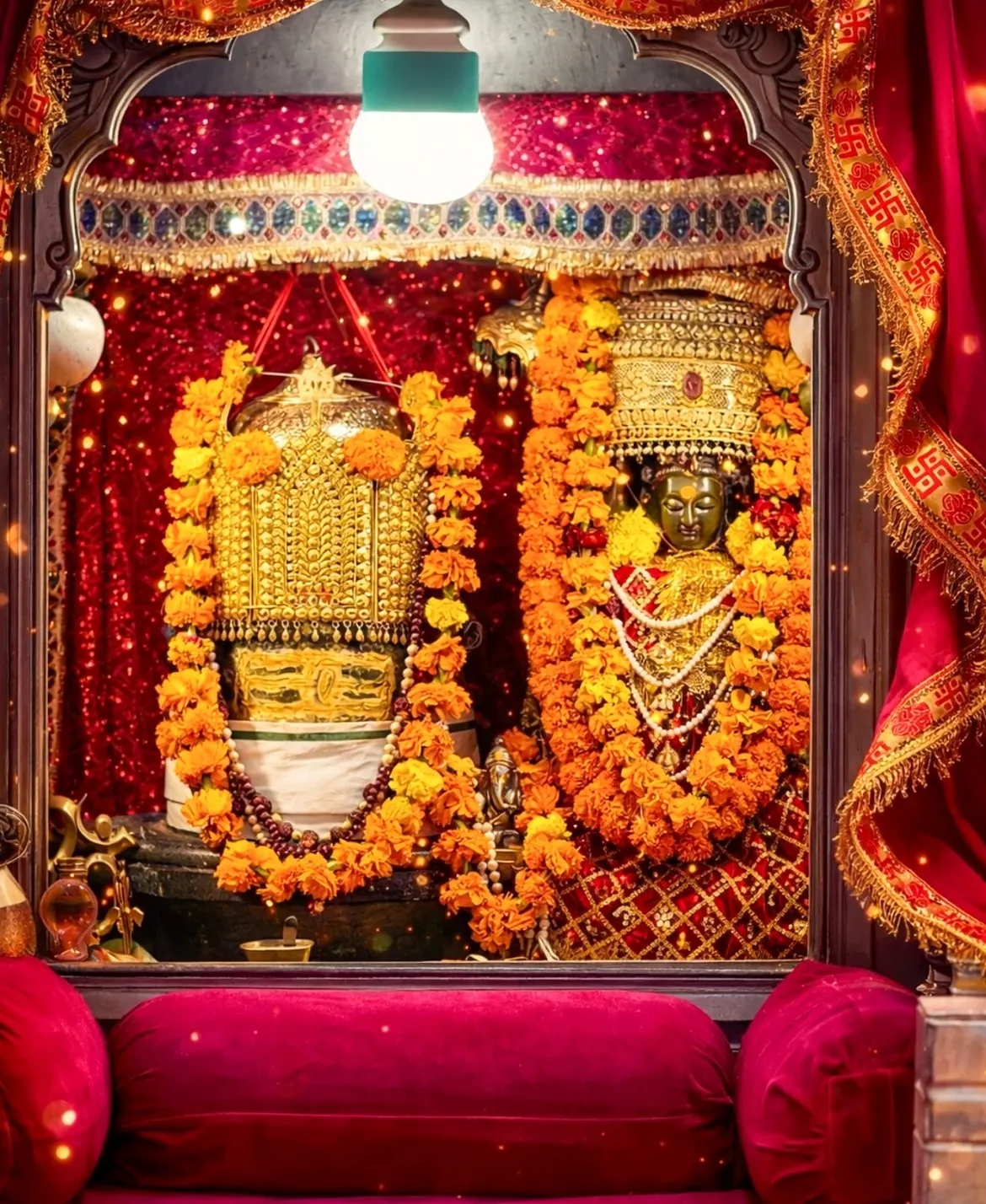
Goddess Kheer Bhawani, also known as Goddess Ragnya, is regarded as an incarnation of the Goddess Durga (Image: Instagram/prannoys)
ALSO READ: Why Do We Remove Footwear Before Entering A Temple? The Spiritual Meaning Explained
The Mystery Behind The Colour Changing Spring
The sacred spring surrounding the Kheer Bhawani temple is famous for changing its colours and for its magical healing properties. According to local beliefs, its water changes its colour at different times, appearing white, pink, red, green or violet.
It is said that when a calamity is about to hit Kashmir, the colour of the spring changes to red. The bigger the calamity, the darker the shade of red. The spring also changes the colour to pink and green, which represents that something good is about to happen. If the colour changes to black, it is considered a bad omen that would result in a disaster in the valley.
Who Built The Kheer Bhawani Temple?
The present temple was built in 1912 CE by Maharaja Pratap Singh, and was later renovated by Maharaja Hari Singh, the former king of Jammu and Kashmir. It is said that Swami Vivekananda also visited this temple and even meditated under a Chinar tree to show his devotion and faith towards Goddess Kheer Bhawani.
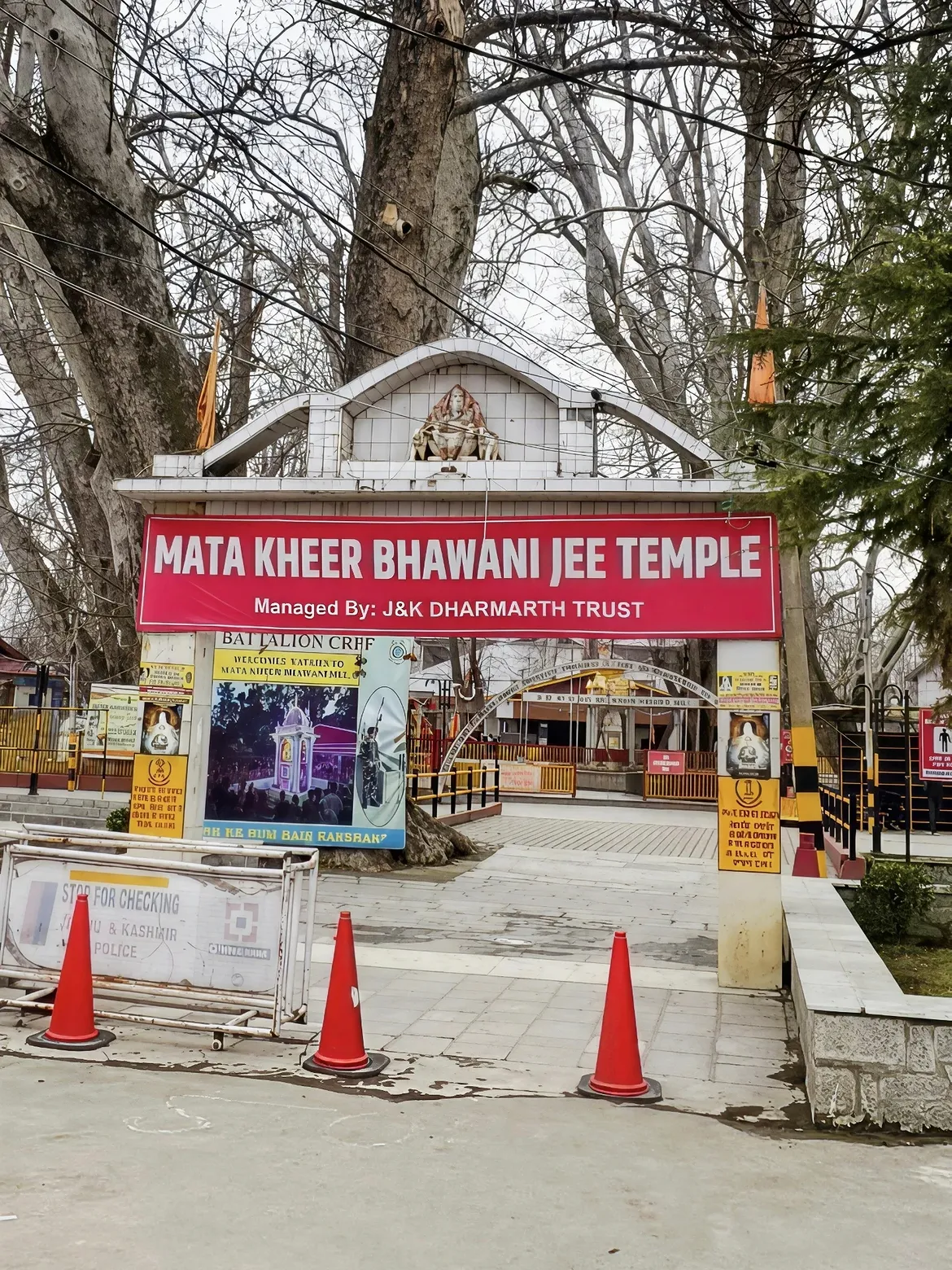
The sacred spring surrounding the Kheer Bhawani temple is famous for changing its colours (Image: Instagram/pannoys)
ALSO READ: Why Are Women Traditionally Not Allowed To Visit Temples During Periods?
The Kheer Bhawani Temple holds immense significance in the hearts of devotees, especially Kashmiri Hindus. Thousands of devotees worship Goddess Kheer Bhawani, offer them kheer as prasad and seek her blessings for peace, protection and prosperity.