
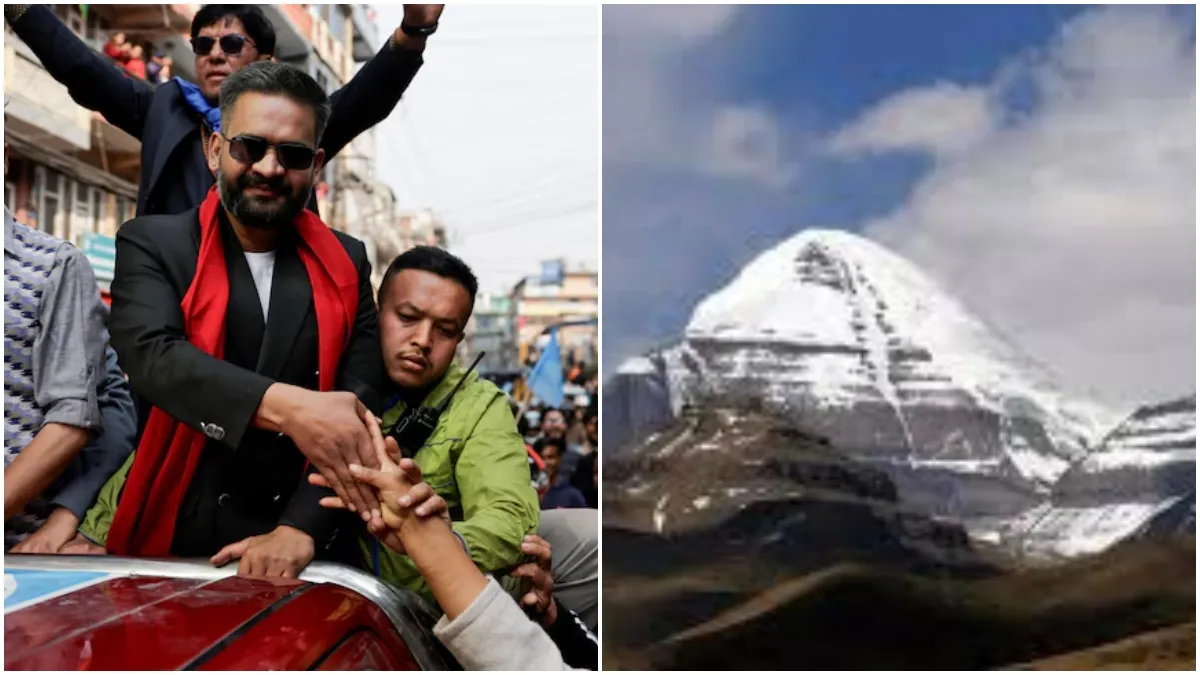
Nepal has objected to the 2026 Kailash Mansarovar Yatra through the Lipulekh Pass, which was agreed upon by both India and China. Nepal's objection is based on its claim that the area falls under its jurisdiction and no activity should take place there without its permission.
The statement, issued from Kathmandu, is seen as the latest flashpoint between India and Nepal over the latter's far-fetched territorial claims over Indian territory. Nepal said it has officially conveyed its concerns to both countries.
The issue was first raised by former Nepal PM KP Sharma Oli in 2025, when he formally objected to Chinese President Xi Jinping for using the area for trade with India.
Ministry of External Affairs (MEA) has recently announced that the Kailash Mansarovar Yatra will be held between June and August 2026, and about 1,000 pilgrims will travel via two routes: Nathu La in Sikkim and Lipulekh Pass in Uttarakhand. The online registration has already begun for the pilgrimage.
ALSO READ: Kailash Manasarovar Yatra 2026: MEA Opens Online Registration For June–August Pilgrimage
What is Nepal's objection?
Nepal says it was neither informed nor consented to the plan. Nepal's Foreign Ministry has claimed that the Lipulekh area is part of the country and its permission is required before any activity there.
Nepal has lodged its objections with both India and China, urging them to refrain from road construction, trade, or religious pilgrimage activities in the area.
According to Nepal, the alleged dispute is not new but rather an old one, dating back to the Sugauli Treaty of 1816, which designated the Kali River as the border.
ALSO READ: India-China Trade To Resume After 6 Year Gap: New Motorised Highway Replaces Mules On Lipulekh Route
Nepal claims that the Kali River originates in Limpiyadhura, and therefore, the area east of it, including Kalapani and Lipulekh, belongs to Nepal.
India has persistently rejected Kathmandu's claims with a clarification that the river's source is further east, and therefore, the region belongs to India.
Following the 1962 Sino-Indian War, India strengthened its presence in the Kalapani region and has been administering it ever since.