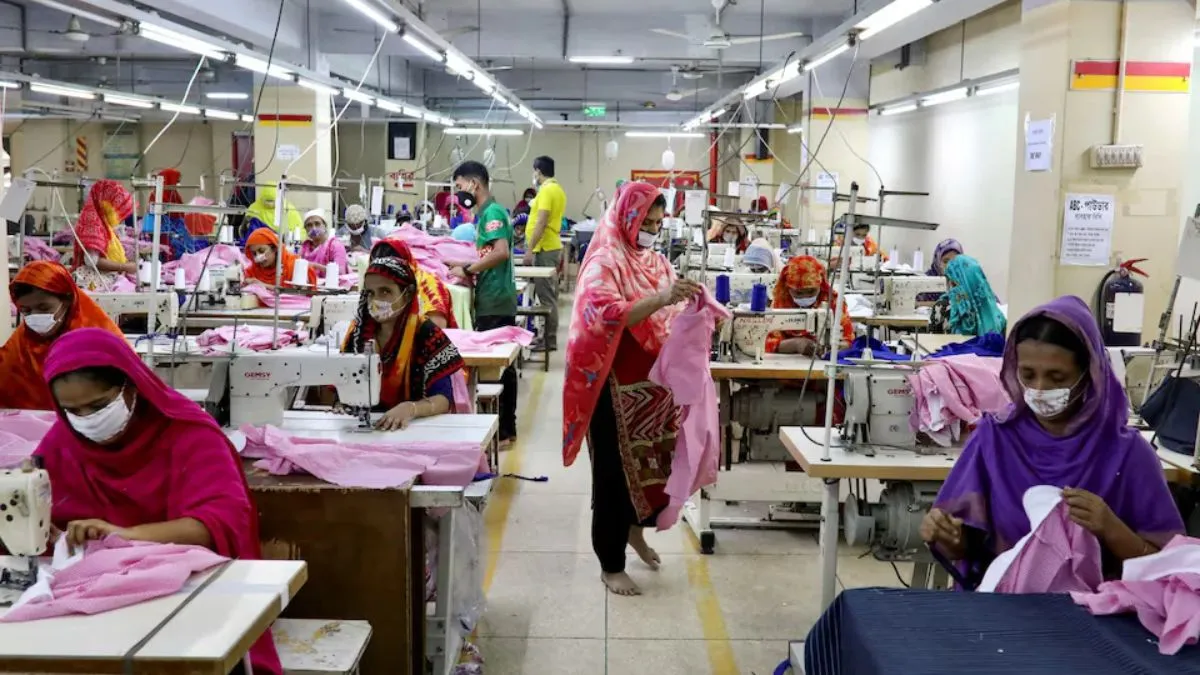
- Bangladesh labour unrest shifts global garment orders.
- India receives significant share of diverted apparel contracts.
- Indian textile sector poised for growth from this shift.
India's garment and textile industry could emerge as a major beneficiary of the ongoing labour unrest in Bangladesh, with several international fashion brands reportedly shifting orders to alternative manufacturing destinations, including India.
Weeks of protests by garment workers demanding higher wages have disrupted production across Bangladesh, raising concerns among global retailers over supply chains, delivery schedules and manufacturing costs.
According to a Reuters report, international fashion brands shifted approximately $254 million worth of garment orders away from Bangladesh between November 1 and 18. India received the largest share of these diverted orders, while Vietnam, Cambodia and Indonesia also emerged as alternative sourcing destinations.
The development could provide a significant boost to India's apparel manufacturing sector, which has been looking to expand its presence in the global garment market.
Why Bangladesh's garment industry is facing trouble
Bangladesh is the world's second-largest exporter of ready-made garments after China. Its apparel industry is a major pillar of the country's economy, contributing more than 80 per cent of its export earnings and employing around four million workers.
However, the industry has been facing mounting pressure following protests over wages and working conditions.
Garment workers have been demanding an increase in their monthly minimum wage from Tk 12,500 to Tk 30,000. The government-approved increase to Tk 17,000 has failed to fully resolve the dispute, with demonstrations and factory disruptions continuing.
The Bangladesh Garment Manufacturers and Exporters Association (BGMEA) has estimated that the unrest has resulted in production losses exceeding $428 million.
With factories struggling to maintain regular operations and meet delivery deadlines, international buyers are increasingly exploring alternative manufacturing destinations.
India emerges as an alternative manufacturing hub
India appears well-positioned to attract international buyers looking to diversify their sourcing operations. Industry representatives have highlighted India's advantages, including domestic cotton production, established textile infrastructure, machinery, deep-sea ports and a large skilled workforce.
Recommended For You
Mahmud Hasan Khan, president of BGMEA, acknowledged India's competitive position, pointing to its infrastructure and manufacturing capabilities.
India's ability to handle production and exports with fewer logistical hurdles could make it an attractive option for global fashion companies seeking reliable suppliers.
The shift is particularly significant for brands such as Zara, H&M, Marks & Spencer and Celio, which have reportedly been among the companies reconsidering their sourcing arrangements.
Delivery timelines give India an advantage
Apart from labour costs, timely delivery has become a major consideration for international fashion retailers. According to industry representatives cited by Reuters, production and delivery in Bangladesh can take around 120 days, compared with approximately 60 to 90 days in competing manufacturing destinations.
India can also offer buyers a delivery advantage of around a week, making it a potentially attractive alternative for companies operating under tight supply-chain schedules.
Rising energy costs, power shortages and political uncertainty have further complicated operations for Bangladeshi manufacturers.
Could the shift become permanent?
The biggest concern for Bangladesh's garment industry is that temporary order diversions could turn into long-term business losses. Bangladesh generates nearly USD 40 billion annually from its ready-made garment sector, making the industry crucial to its economy and employment.
Factory owners have warned that restoring international buyers' confidence will be essential to preventing further losses.
However, the Bangladesh government has dismissed reports of garment export orders moving to other countries as misleading. BNP acting secretary general Ruhul Kabir Rizvi has questioned claims about large-scale order relocation and said the government has responded to workers' concerns.
Meanwhile, labour unrest, rising production expenses and uncertainty over delivery schedules continue to pose challenges for the industry.
For India, the developments present an opportunity to strengthen its position in the global apparel supply chain. Whether it can convert the diverted orders into sustained business will depend on its ability to offer competitive prices, consistent quality and reliable delivery.
(With inputs feom Reuters)