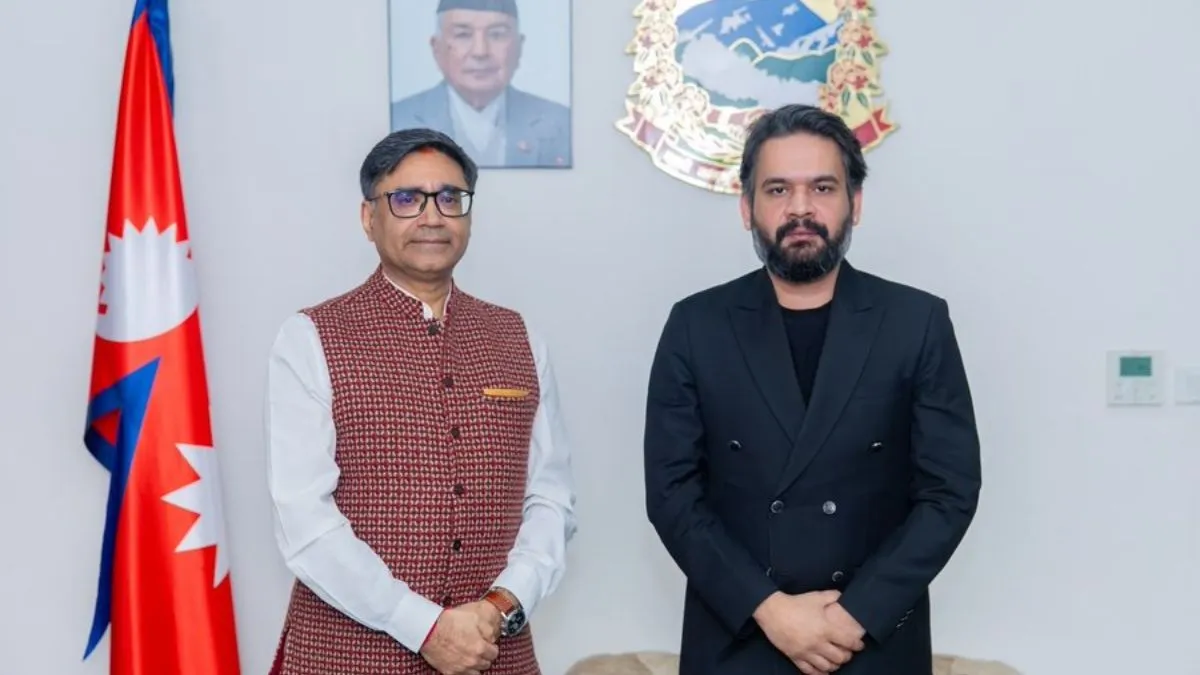
- Nepal PM Balen Shah's first bilateral visit to India.
- Nepal seeks over USD 2 billion economic assistance package.
- Border dispute, Gorkha recruitment remain unresolved issues.
Nepal Prime Minister Balendra Shah is set to visit India from November 22, marking his first bilateral trip since taking office in March. The visit comes after months of diplomatic strain between Kathmandu and New Delhi, with renewed engagement between the two sides and a proposed economic assistance package worth over USD 2 billion expected to feature prominently.
The latest sign of a shift came on November 5, when Shah met Indian Foreign Secretary Vikram Misri in Kathmandu. Misri was concluding a two-day visit to Nepal, during which discussions covered water resources, energy and trade, according to a joint statement.
The meeting marked a departure from the approach Shah had reportedly adopted earlier this year, when Misri's proposed visit to Nepal in May was postponed amid reports that the Nepalese Prime Minister was unwilling to meet foreign diplomats below the level of a foreign minister.
Recommended For You
ALSO READ: Nepal: 20-Year-Old Indian National Found Dead In Badimalika; Was Trapped In Heavy Snowfall
Why Was Vikram Misri's May Visit Postponed?
Misri was scheduled to visit Kathmandu on May 11 and 12, but the trip was called off. India did not publicly provide a reason for the postponement.
However, The Kathmandu Post reported that Shah had introduced a protocol under which he would avoid one-on-one meetings with foreign diplomats below the rank of a foreign minister.
The approach was not limited to Indian officials. Shah also declined meetings with US Assistant Secretary of State Samir Paul Kapur and US envoy to India Sergio Gor earlier this year.
His meeting with Misri on November 5 therefore marked a change in that approach, coming just weeks before his expected visit to India.
Nepal Seeks Over USD 2 Billion Economic Package From India
Economic cooperation is expected to be an important part of the renewed engagement. Nepal has sought an economic package worth more than USD 2 billion (approximately Rs 18,786 crore) from India, comprising lines of credit and grants.
According to The Kathmandu Post, the proposed funds would primarily be used to build electricity transmission lines and support reconstruction following the August floods.
The proposal was discussed during Misri's meeting with Shah. A Nepalese Finance Ministry official told the newspaper that an announcement could be made during the Prime Minister's India visit. New Delhi has not made any announcement on the package so far.
India provided more than 140 tonnes of relief material to Nepal between August 26 and September 19 following the floods. It also sent rescue teams, equipment and tunnelling experts to assist with relief and restoration efforts.
Shah acknowledged India's assistance in his first address to the United Nations General Assembly in September. He also proposed a Himalayan Climate Resilience Mechanism involving Nepal, India and China to address climate-related disasters.
Visiting professor at Ashoka University Constantino Xavier pointed to the economic significance of closer ties with India, saying: "Nepal and other neighbours realise rising reliance on and benefits of closer economic relations with India to attain developmental objectives - especially given global slowdown and disruptions."
Kalapani-Lipulekh Dispute Remains Unresolved
The border dispute involving Kalapani, Lipulekh and Limpiyadhura remains a longstanding point of contention between the two countries.
Tensions resurfaced after India and China agreed to facilitate the Kailash Mansarovar Yatra through Uttarakhand's Lipulekh Pass. Nepal objected to the arrangement, claiming Lipulekh as part of its territory under the 1816 Sugauli Treaty. India rejected Nepal's territorial claims as "untenable".
The dispute was among the issues contributing to strained relations between Kathmandu and New Delhi earlier this year. Nepal has since indicated its willingness to address the matter through diplomatic channels.
There have also been signs of continued engagement. In June, Rabi Lamichhane, chairperson of Shah's Rastriya Swatantra Party (RSP), received a high-profile welcome in New Delhi. The following month, Shah met Indian Ambassador to Nepal Naveen Srivastava, departing from his reported protocol on meetings with foreign diplomats.
Gorkha Recruitment Under Agnipath Scheme
The suspension of recruitment of Nepali Gorkhas into the Indian Army under the Agnipath scheme is another unresolved issue between the two countries.
Introduced in 2022, the scheme provides for a four-year service period, after which up to 25 per cent of recruits can be retained for permanent service. Nepal objected to the arrangement, arguing that it was inconsistent with the 1947 tripartite agreement between India, Nepal and Britain governing Gorkha recruitment.
The disagreement led Nepal to suspend the recruitment of its citizens into the Indian Army under the scheme.
India has since made changes to the Agnipath framework, allowing Agniveers undergoing training in the three services to join the forces as regular soldiers, according to the report. The development could provide an opening for discussions on resuming the recruitment of Nepali Gorkhas.
Shah's upcoming visit will be the first by a Nepalese Prime Minister to India in three years. His predecessor, Pushpa Kamal Dahal, visited New Delhi in 2023. The visit comes as both countries seek to strengthen engagement amid unresolved economic and diplomatic issues.
You May Also Like To Watch: