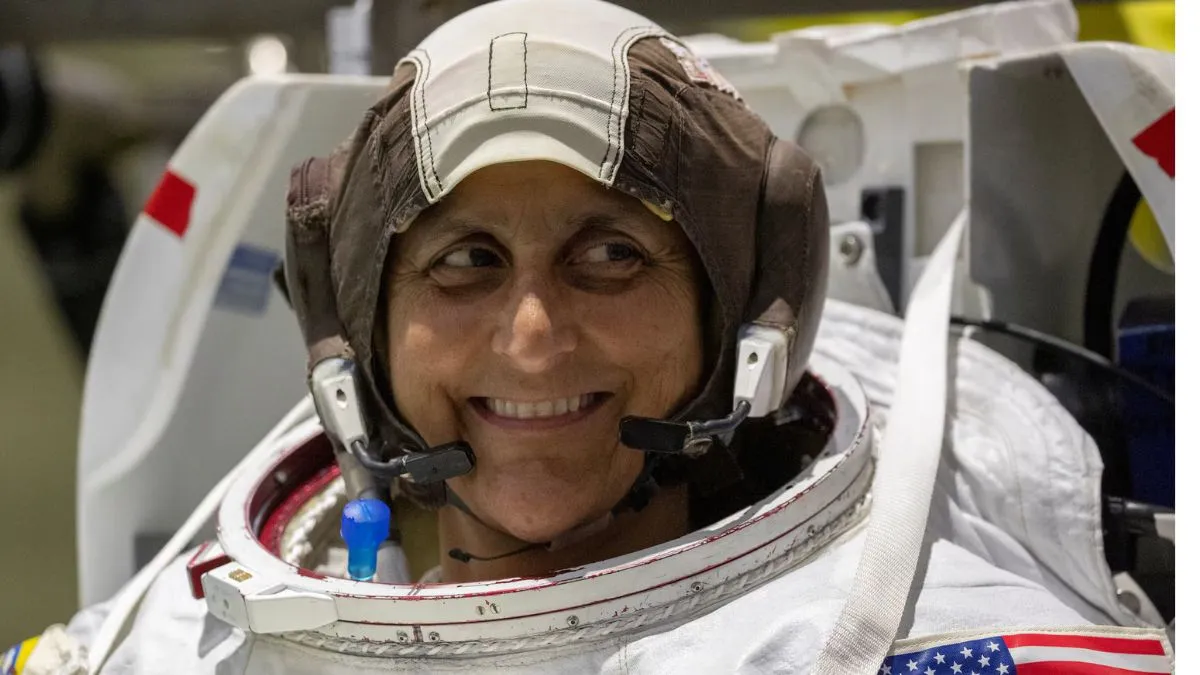
NASA astronauts Sunita Williams and Butch Wilmore, who launched for what was meant to be an eight-day mission, have now spent over nine months on the International Space Station (ISS) due to persistent technical glitches. As they prepare to return to Earth aboard a SpaceX Dragon spacecraft no earlier than March 19, interest has sparked around what their prolonged orbital stint will earn them financially.
Astronaut Compensation Explained
Retired NASA astronaut Cady Coleman clarified that astronauts don’t receive overtime pay, even for extended missions. Classified as federal employees, their time in space is considered standard work, with NASA covering necessities like food and housing. They do get a modest daily perk—about $4 (Rs 347) for small expenses, Coleman told Washingtonian.
During her 159-day mission in 2010-11, Coleman earned roughly $636 (over Rs 55,000) in additional pay. For Williams and Wilmore, whose mission exceeds 287 days, this incidental allowance is estimated at $1,148 (around Rs 1 lakh) each. NASA stresses that the pair aren’t “stranded,” pointing to their ongoing tasks aboard the ISS.
READ: Sunita Williams Earth Return Delayed, NASA Astronaut Now To Leave ISS On March 19
What They'll Take Home
As GS-15 federal employees—the top tier of the General Schedule pay scale—Williams and Wilmore earn base salaries between $125,133 and $162,672 annually (approximately Rs 1.08 crore to Rs 1.41 crore). For their nine-month-plus mission, their prorated pay is expected to range from $93,850 to $122,004 (about Rs 81 lakh to Rs 1.05 crore). With the $1,148 incidental stipend added, their total mission earnings should fall between $94,998 and $123,152 (roughly Rs 82 lakh to Rs 1.06 crore).
Recommended For You
Heading Home
Part of NASA’s Boeing Starliner test flight, Williams and Wilmore faced ongoing delays due to spacecraft issues. NASA recently approved a rescue operation, and on Friday at 7:03 pm ET (4:33 am IST), a SpaceX Falcon 9 rocket launched the Dragon spacecraft from Kennedy Space Center in Florida. It docked with the ISS by 10 am, marking the start of their journey back.
(With inputs from agency)