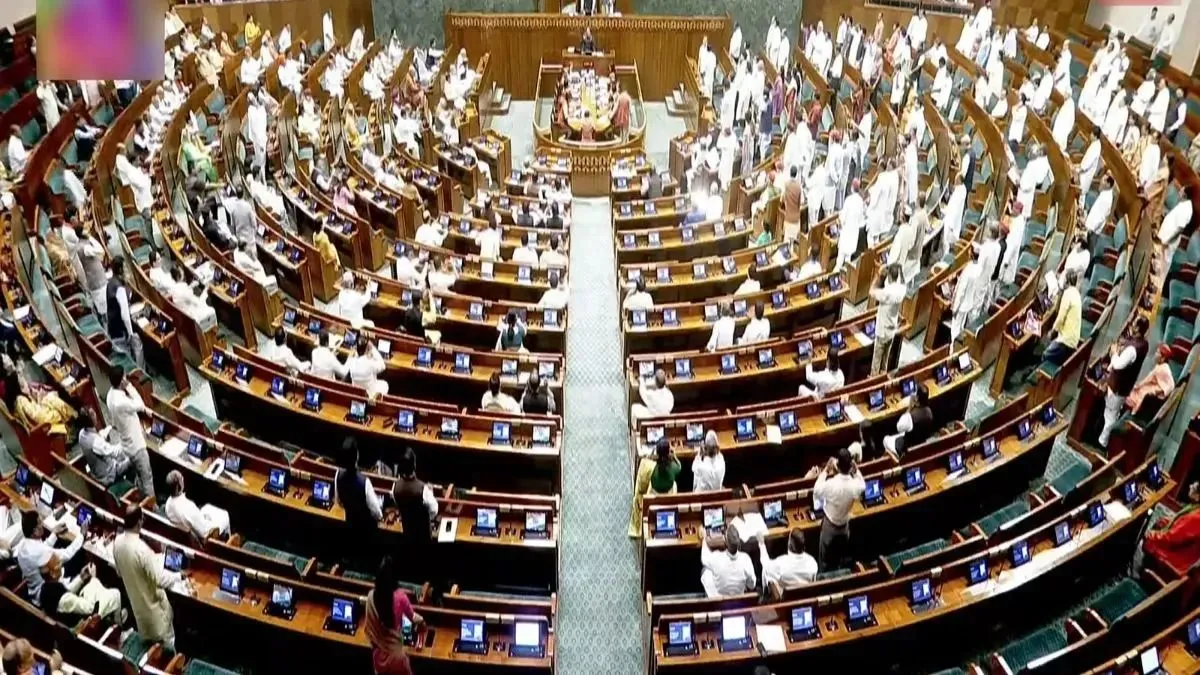
- Opposition fears gerrymandering with new delimitation legislation.
- Redrawing boundaries could unfairly benefit one political party.
- Delimitation Commission's role crucial for fair elections.
Delimitation Bill: Imagine a party improving its chances of winning an election not by winning more votes, but simply by redrawing the map. That fear is driving the opposition's pushback against delimitation as the Centre presses fresh legislation ahead of the 2029 Lok Sabha elections, putting gerrymandering, redrawing electoral boundaries to gain a political edge, at the centre of India's political debate.
ALSO READ: Delimitation Bill Empowers EC To Redraw Assembly Seats In Pakistan-Held J-K Once Occupation Ends
What Is Gerrymandering And How Does It Tilt Elections?
Gerrymandering is the practice of drawing constituency borders to give one political party an outsized seat advantage relative to its overall vote share. Even when voter turnout and individual ballots stay unchanged, shifting which neighbourhoods sit inside a given seat can swing close contests.
- Packing: Concentrates opposing voters into a small number of constituencies, so they win those seats by wide margins but lose influence in neighbouring seats.
- Cracking: Splits a bloc of voters across multiple constituencies so they form a minority in each, making it harder to elect candidates they favour.
Origin Of The Term
The term originated in Massachusetts in 1812 by blending Governor Elbridge Gerry's surname with "salamander." After Gerry signed a bill redrawing state senate districts to benefit his Democratic-Republican Party, a Boston Gazette cartoon published on March 26, 1812, compared a twisting electoral district to a salamander.
Recommended For You
Gerry reportedly viewed the proposal as 'highly disagreeable' and lost his next election. However, his party kept control of the legislature. Over time, the word came to describe any boundary redrawing aimed at partisan gain rather than neutral representation.
Who Decides Constituency Boundaries In India?
Constituency boundaries in India are drawn by a high-powered Delimitation Commission, established four times under the Delimitation Commission Acts of 1952, 1963, 1973, and 2002. Once notified by the President, its orders carry the force of law, cannot be challenged in court, and are placed before Parliament and state assemblies without power for legislatures to modify them.
Because those orders are binding and cannot be altered, opposition parties argue that the commission's composition, independence, and rules are crucial to keeping the exercise fair.
Why Opposition Parties Fear Gerrymandering
Opposition leaders argue that the concern goes beyond how many MPs each state sends to Parliament. Even if states retain their existing share of Lok Sabha seats, redrawing boundaries within states can reshape local strongholds and community voting patterns.
Leader of the Opposition in the Lok Sabha, Rahul Gandhi has accused the BJP of seeking to redraw India's electoral map for its own benefit ahead of the 2029 general elections. Opposition parties warn that shifting constituency lines could change election outcomes without changing a single vote or removing anyone from the electoral rolls.
(With Inputs From Jagran.com)