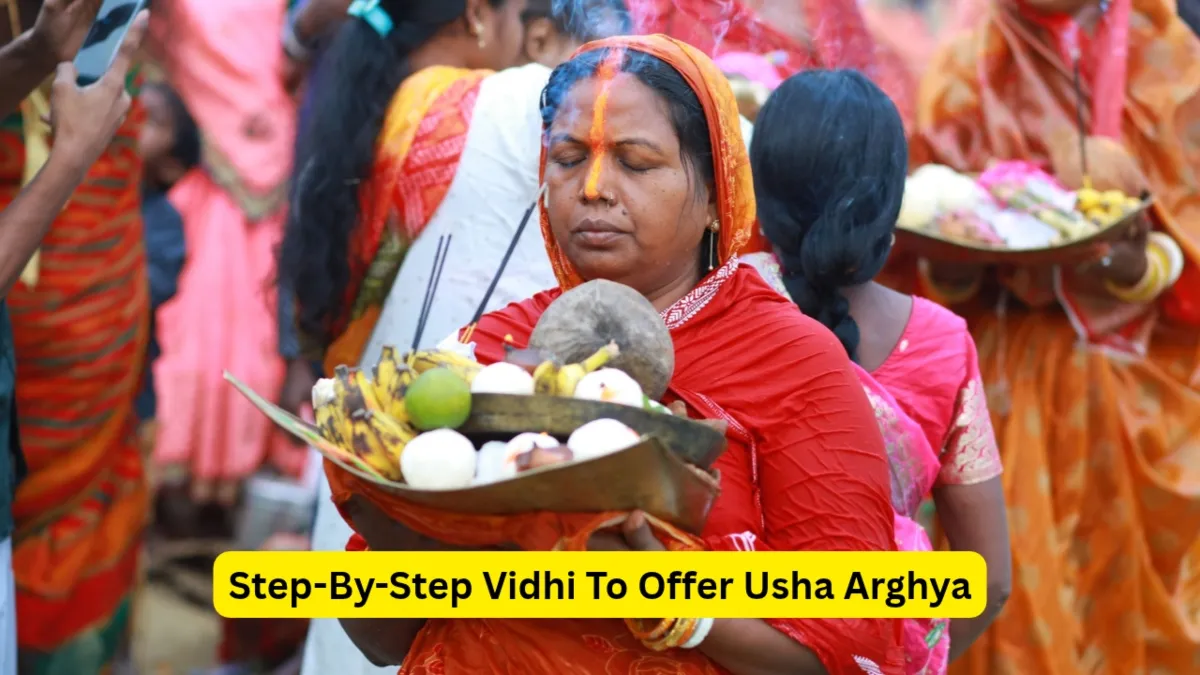
Chhath Puja begins on the Chaturthi Tithi of the Shukla Paksha (bright fortnight) of the month of Kartika and concludes on the Saptami Tithi. The fourth day, also called Usha Arghya, is on 16th November.
On this day, the vratis (devotees) gather before dawn to offer arghaya to the rising sun. After this ritual, the prana is done with water and ginger.
Learn the significance of this day and how to perform Usha Arghya and Parana.
What Is Usha Arghya and Why Is It Significant?
The final day, or the fourth day, of Chhath Puja is dedicated to Usha, the goddess of dawn and the first ray of the Sun.
While Sandhya Arghya expresses gratitude to the setting sun for past blessings, Usha Arghya honours the rising sun, symbolising new beginnings, health, longevity, and prosperity. Offering water to the rising Sun God ends the strict 36-hour Nirjala (waterless) fast.
Essential Usha Arghya Samagri
Before heading to the riverbank (ghat) or home water setup to perform Usha Arghya, ensure your bamboo basket (daura) has these items:
Item | Quantity | Cultural Significance |
Bamboo Supa / Brass Supa | 2–3 pieces | Traditional vessel for offering |
Fresh Thekua and Khajuri | As prepared | Core prasad cooked on a clay stove |
Seasonal Fruits | Sugarcane, Banana clusters, Pomelo, Radish | Offerings of fresh harvest |
Akshat and Roli | 1 small bowl | Sacred rice and red vermillion |
Raw Milk and Water | In a brass container | Used for the continuous flow (Arghya) |
Earthen Lamps (Diyas) | 5–7 per Supa (lit with pure cow ghee) | remove the darkness |
How To Do Usha Arghya At The Ghat Or At Home
Follow these steps to perform the ritual for maximum spiritual benefits:
1. Vratis should reach the ghat or home rooftop reservoir at least 45 minutes before local sunrise.
2. Clean the space where you will perform the puja, light the ghee lamps and place them inside the bamboo Supa.
3. Then place the offering inside the supa, like fresh fruits, sugarcane sticks, coconut, and Thekua.
4. Apply vermillion and rice grains onto the contents of the Supa.
5. The Vrati, supported by family members, should enter the water body facing east. Stand in the water, submerged up to waist level.
6. As soon as the first rays of the sun appear on the horizon, hold the Supa with both hands at chest level.
7. Ask a family member to slowly pour raw milk mixed with water from a brass vessel in front of your Supa, letting it flow into the main body of water while looking at the Sun God.
8. Recite the Surya Mantra at least 3 to 11 times while making the offering.
9. Devotees should bow down to the Sun God, touch the water surface, and apply Tika from the riverbed/water to their forehead.
10. Collect the sacred Prasad from the Supa.
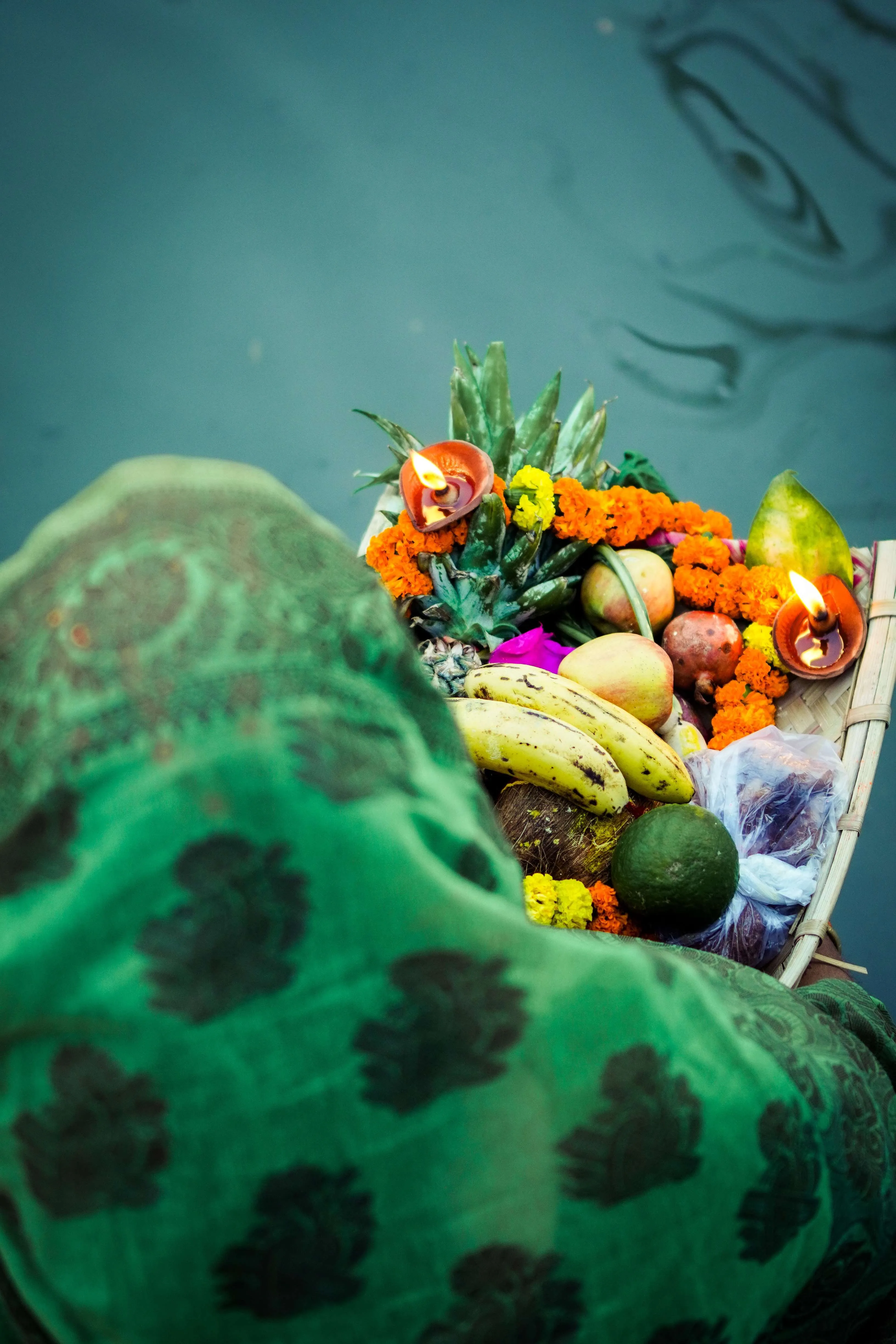
Vratis should reach the ghat or home rooftop reservoir at least 45 minutes before local sunrise (Image: Pexels)
ALSO READ: Chhath Puja Day 3: Why Do Devotees Offer Arghya To The Setting Sun?
How To Break The Fast: Parana Rules
The 36-hour fast is not complete until the Parana is properly done after Usha Arghya:
1. Devotees, to break the fast, should first take a sip of raw milk mixed with a drop of water, or swallow a piece of ginger mixed with jaggery.
2. After this, eat a small piece of Thekua and Mahaprasad at the Ghat.
3. After reaching home, eat a simple sattvic meal with chana dal, kaddoo (bottle gourd) sabzi, and arwa rice.
FAQs
1. What is Usha Arghya and why is it performed?
Usha Arghya is the offering to the rising sun god, Surya Dev, symbolising the beginning of life and new opportunities, and marking the end of the Chhath Puja fast.
2. What are the specific offerings (prasad) required for Usha Arghya?
Traditional offerings like Thekua, Ladoo, fruits, and sweets are required for Usha Arghya.
3. Who performs Usha Arghya and what role do family members play?
The vratis performs the main ritual, and family members play supportive roles in preparations and participation.