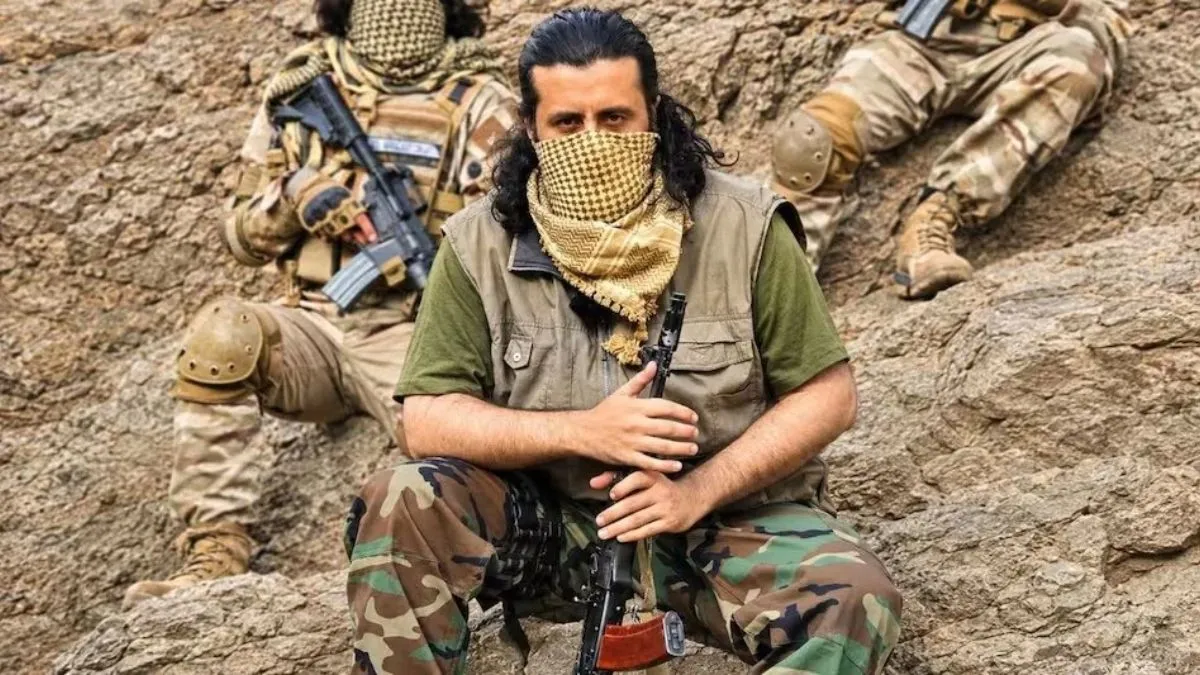
- Rehman Gul, ex-Pak Army captain, now leads BLA.
- Gul previously commanded BLA's Majeed Brigade unit.
- Appointment follows Bashir Zeb Baloch's leadership departure.
A former Pakistan Army captain has emerged as the new leader of the Balochistan Liberation Army (BLA), a banned armed terror organisation operating in Pakistan's southwestern Balochistan province. Rehman Gul, also known by his aliases Mureed and Mureed Baloch, was appointed the organisation's new commander-in-chief on Saturday, according to a statement issued by the BLA's spokesperson, Jeeyand Baloch.
Gul's appointment marks a significant leadership change within the organisation, which has been involved in an armed insurgency against the Pakistani state for years.
Before becoming the BLA chief, Gul headed the group's Majeed Brigade, an armed unit associated with suicide attacks. He was also a member of the organisation's Senior Command Council.
According to the BLA, its senior leadership and commanders unanimously approved his appointment following consultations within the organisation.
Gul replaces Bashir Zeb Baloch, whose departure from the top position was announced on November 3. The appointment completes the leadership transition that had left the organisation's senior command council temporarily responsible for its administrative and military affairs.
The leadership change comes amid continuing violence in Balochistan, where Pakistani security forces and armed separatist groups have been involved in repeated clashes.
From Pakistan Army Captain To Baloch Separatist Leader
Rehman Gul's background makes his appointment particularly notable. Before joining the BLA, he served in the Pakistan Army for approximately eight years. Born on August 14, 1984, in Nushki district of Balochistan, Gul joined the Pakistani military in 2002 after completing his education.
He was commissioned through the Pakistan Military Academy's 109th Long Course and served with the 19 Frontier Force Regiment. During his military career, he was reportedly deployed in South Waziristan and North Waziristan, where Pakistani forces were conducting operations against Tehreek-e-Taliban Pakistan (TTP) militants.
Recommended For You
His military assignments also included the Kashmir sector along the Line of Control, with his final reported posting in the Kotli area of Pakistan-occupied Kashmir.
After serving for around eight years, Gul left the military in 2010 and subsequently joined the BLA.
A 2025 profile published by the US-based Jamestown Foundation documented his transition from military service to armed separatist activity. The profile also described his growing influence within the organisation's command structure.
Rise Through The BLA's Leadership Structure
After joining the organisation, Gul initially operated in the Bolan region under the leadership of Aslam Baloch, the founder of the BLA faction associated with the current leadership.
Over the years, he assumed several senior responsibilities within the organisation and became an influential commander in Balochistan.
He reportedly held command positions in areas including Kharan and Kalat before rising to lead the Majeed Brigade.
His appointment as commander-in-chief places him at the top of the organisation's leadership structure after years of involvement in its military wing.
The Majeed Brigade has been associated with several high-profile attacks claimed by the BLA, including operations targeting Pakistani security personnel and Chinese interests.
Gul's previous position within the brigade had made him one of the most influential figures in the organisation even before his elevation to the top post.
What Led To Bashir Zeb's Exit?
The leadership transition follows the BLA's announcement on November 3 that Bashir Zeb would no longer serve as its commander-in-chief.
At the time, spokesperson Jeeyand Baloch said the organisation's Senior Command Council had unanimously approved the decision following an internal meeting.
The organisation described the change as a constitutional and orderly leadership transition, although it did not initially disclose the detailed reasons behind Zeb's departure.
According to analysis published by the Pakistan Institute for Conflict and Security Studies (PICSS), internal disagreements over military strategy and the consequences of Operation Herof 2 were among the factors behind the leadership crisis.
The assessment suggested that differences had emerged over the risks associated with large-scale operations and the losses suffered by the organisation.
However, the BLA has not publicly confirmed these explanations as the official reason for the leadership change. With Gul's appointment, the organisation has now formally selected a successor to Bashir Zeb.