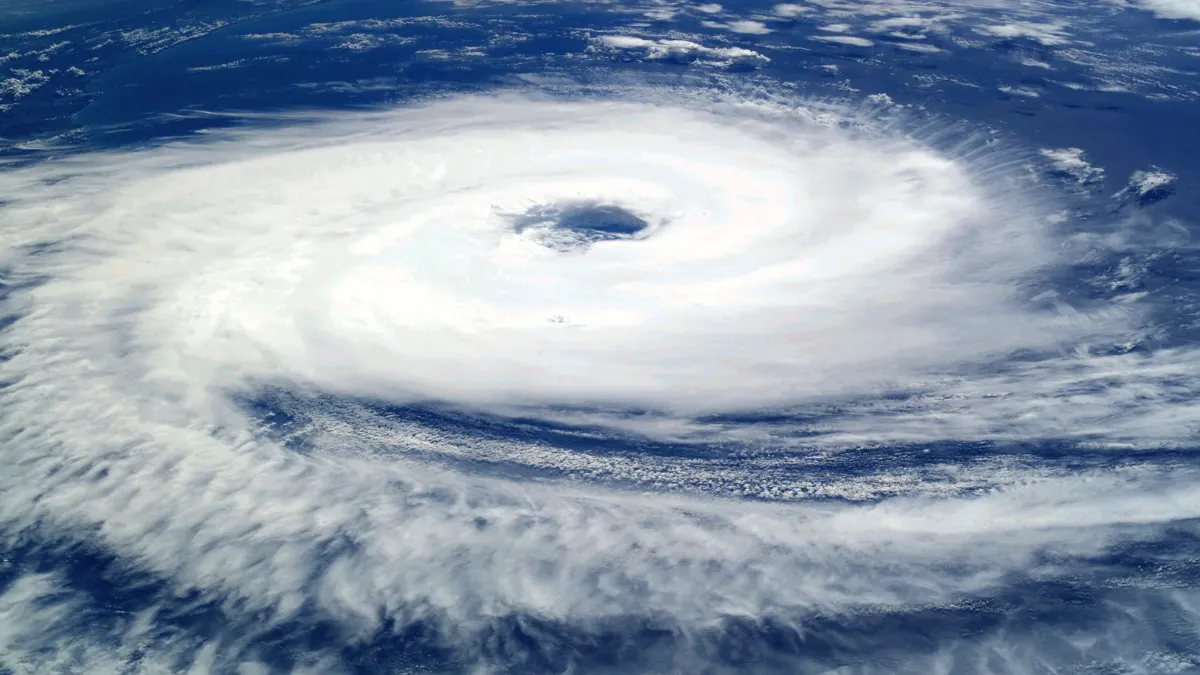
- Deep depression may intensify into a severe cyclonic storm Akvan by November 17.
- North Andhra Pradesh and south Odisha coasts are under watch.
- Akvan is named after a demon from Persian mythology, with the name contributed by Iran.
Cyclone Akvan Tracker: After two severe cyclonic storms, Arnab and Murasu, Andhra Pradesh is bracing for another storm. A deep depression over the Bay of Bengal is said to turn into a cyclonic storm, Akvan, by this evening. It will further intensify into a severe cyclonic storm by November 17.
According to the India Meteorological Department's (IMD) forecast, the cyclonic storm will likely move toward the Andhra Pradesh coast by November 19. However, the weather department has not notified the exact landfall location, but as per its forecast, the north Andhra and south Odisha coasts are the risk points.
Deep Depression over Southeast & adjoining Southwest Bay of Bengal [Pre Cyclone Watch for Andhra Pradesh & adjoining South Odisha coast Yellow Message] The Deep Depression over Southeast & adjoining Southwest Bay of Bengal moved north-northwestwards with the speed of 08 kmph during past 06 hours and lay centered at 0530 hours IST of today, the 16th November, 2026 over the same region, near Latitude 11.0°N and Longitude 86.5°E, about 630 km east-northeast of Trincomalee (Sri Lanka), 680km west of Sri Vijaya Puram (Andaman & Nicobar Islands), 720 km east-southeast of Chennai (Tamil Nadu), 820 km south-southeast of Visakhapatnam (Andhra Pradesh) and 940 km south of Gopalpur (Odisha). It is very likely to continue to move north-northwestwards, intensify further into a Cyclonic Storm over the central parts of south & adjoining westcentral Bay of Bengal in the evening of 16th November and into a Severe Cyclonic Storm over westcentral Bay of Bengal in the evening of 17th November, 2026. Thereafter, it is likely to intensify further and move northwestwards and reach over westcentral Bay of Bengal near Andhra Pradesh coast around night of 19th November 2026 as a very severe cyclonic storm.
— India Meteorological Department (@Indiametdept) November 16, 2026
Now, as we know, the third cyclonic system over the Bay of Bengal would be named Akvan; let us know the meaning and origin of its name.
Recommended For You
Cyclone Akvan: Meaning And Origin
Akvan is the name Iran contributed under the regional cyclone naming system for the North Indian Ocean. The name comes from Persian mythology and refers to Akvan Div, a demon who appears in Ferdowsi’s epic poem, the Shahnameh. The system will officially get this name once it strengthens into a cyclonic storm.
The naming follows a fixed list agreed by 13 countries under the WMO-ESCAP Panel on Tropical Cyclones. In 2020, these countries put together a list of 169 names for future storms. The India Meteorological Department’s Regional Specialised Meteorological Centre in New Delhi is the one that assigns the names to cyclones forming over the Bay of Bengal and the Arabian Sea.
Names are taken in a set order, no matter where the cyclone is expected to make landfall. In the current sequence, Bangladesh’s Arnab comes first, followed by India’s Murasu, and then Iran’s Akvan.
Why Are Cyclones Given Names?
Cyclone names help authorities, meteorologists and the public keep track of weather systems without mix-ups. Short, clear names also make it easier to pass on warnings, especially when more than one storm is active at the same time. A cyclone's name does not say anything about how strong it is or which area it might affect.
People living along the coast should stick to the advisories from the IMD and local disaster management authorities. Fishermen are usually told to stay away from the sea when winds are strong and conditions are rough. Residents of coastal Andhra Pradesh, Odisha and Tamil Nadu should keep checking the official weather updates.
Third Storm In Quick Succession
Akvan has arrived during an unusually active post-monsoon cyclone season. Cyclone Arnab hit near Narasapur in Andhra Pradesh on October 28 as a very severe cyclonic storm, with winds reaching 135 kmph. Cyclone Murasu came next, making Akvan the third named storm to form in quick succession.