- ECI dismisses social media claims on vote count.
- EC Clarifies 2024 Lok Sabha and Assembly election figures.
- Form 17C is statutory record for votes polled.
The Election Commission of India (ECI) has dismissed viral social media claims alleging major discrepancies between the number of votes polled and counted during the 2024 Lok Sabha and state Assembly elections. Citing data from constituencies such as Mumbai North, Srinagar, Badkhal and Beed, the Commission termed the allegations misleading and clarified the actual figures.
In a statement issued on Wednesday, the ECI said that all information related to votes polled and counted is officially published and available for public verification on its website.
In a post on X, the Commission shared screenshots of social media claims concerning constituencies in Maharashtra, Haryana and Jammu and Kashmir, along with official election data to counter the allegations.
"MISLEADING SOCIAL MEDIA POST CLAIMING INCONSISTENCIES IN VOTES POLLED AND VOTES COUNTED IN THE GENERAL ELECTIONS TO THE LOK SABHA, 2024 AND GENERAL ELECTIONS TO LEGISLATIVE ASSEMBLIES OF STATES HELD IN 2024."
#ECIFactCheck : MISLEADING SOCIAL MEDIA POST CLAIMING INCONSISTENCIES IN VOTES POLLED AND VOTES COUNTED IN THE GENERAL ELECTIONS TO THE LOK SABHA, 2024 AND GENERAL ELECTIONS TO LEGISLATIVE ASSEMBLIES OF STATES HELD IN 2024. (1/3) https://t.co/2RCxXFPyli
— Election Commission of India (@ECISVEEP) November 11, 2026
The Commission said the social media post had alleged discrepancies between votes polled and votes counted during the 2024 Lok Sabha elections and Assembly elections held in several states. However, it maintained that the claims were misleading and did not reflect the actual election data.
The ECI also questioned the reference to "internal records" in the post, which named certain constituencies and alleged that the Commission had counted zero votes in those seats. It pointed out that the post did not specify which "internal records" had been used to substantiate the claims.
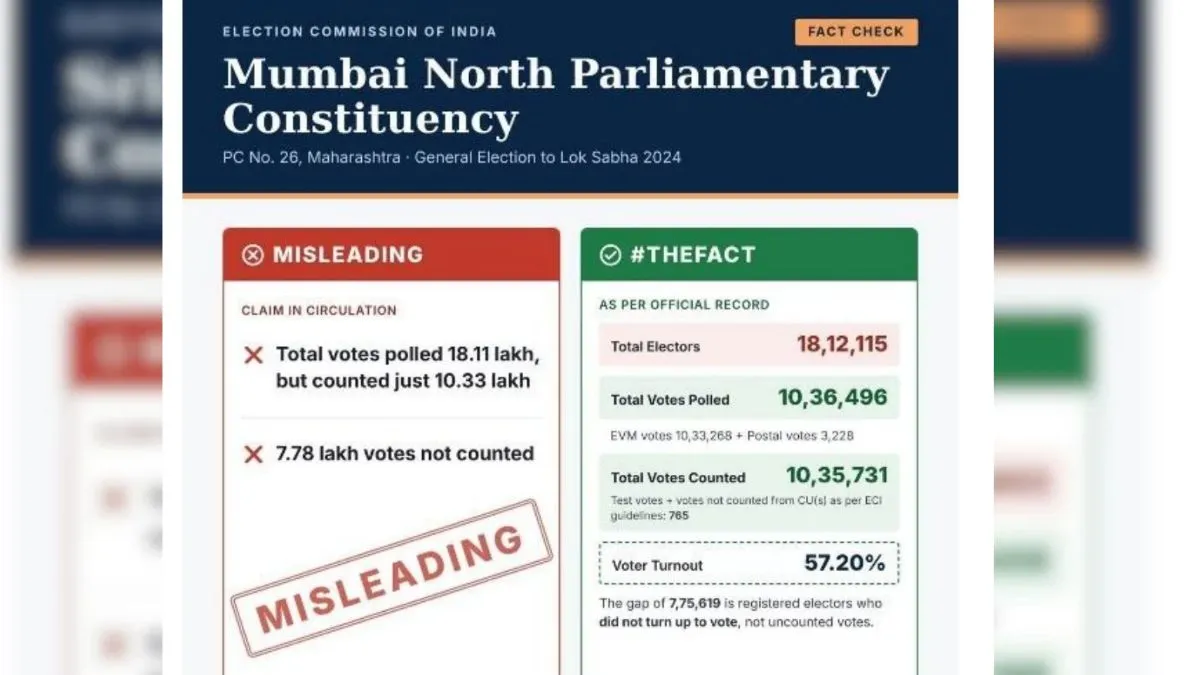
One of the claims concerned the Mumbai North parliamentary constituency, where the social media post alleged that 18.11 lakh votes had been polled, but only 10.33 lakh were counted, leaving 7.78 lakh votes unaccounted for.
Rejecting the claim, the ECI clarified that Mumbai North had 18,12,115 registered electors, while the actual number of votes polled stood at 10,36,496. This included 10,33,268 votes cast through EVMs and 3,228 postal votes.
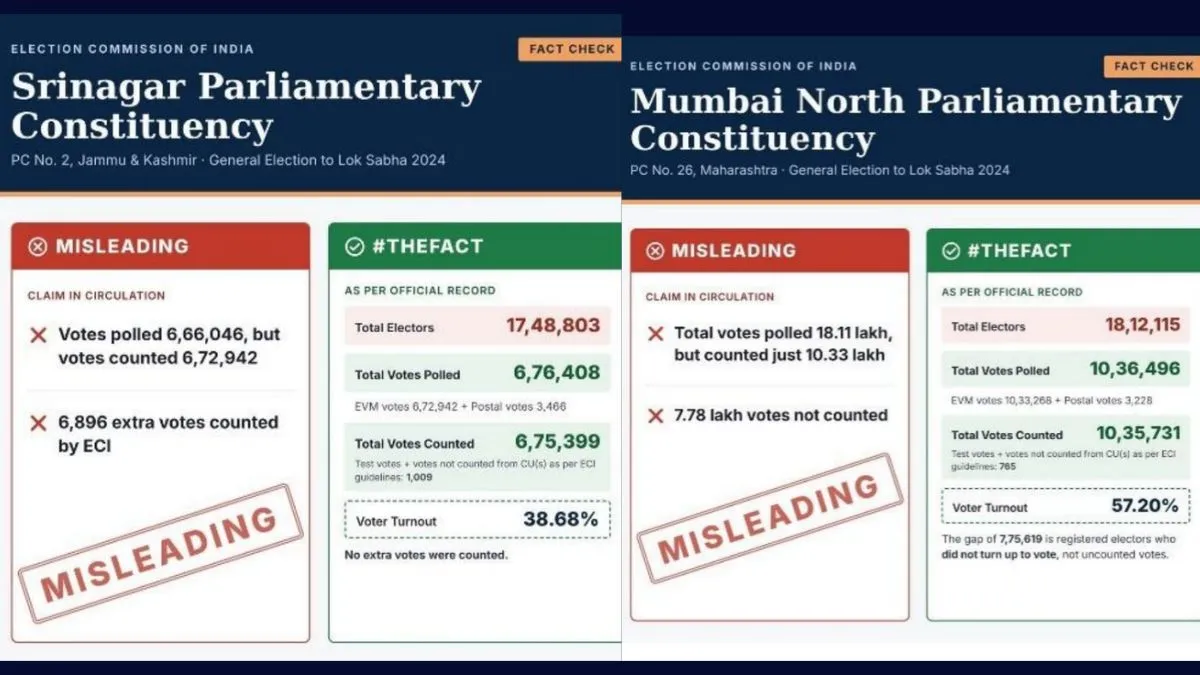
The total number of votes counted was 10,35,731. The ECI explained that such misleading claims often arise from confusion between the total number of registered electors and the actual number of votes polled. The difference between the two is then incorrectly portrayed as uncounted votes.
Recommended For You
Where can election data be accessed?
The Election Commission said detailed election data are available in its statistical reports and index cards, which contain information on registered electors, votes polled through Electronic Voting Machines (EVMs), postal ballots and overall voter turnout.
These records are published on the Commission's official website and can be accessed by the public to verify election figures.
Form 17C described as official record
The ECI said Form 17C is the only statutory record of votes polled at a polling station. It is prepared by the Presiding Officer at the conclusion of polling for clarifying the procedure for recording and verifying votes.
The Commission stated, "Form 17C is the sole statutory account of votes cast, which is prepared by the Presiding Officer of the polling station at the close of poll. Copies of Part-I of Form 17-C are shared with all the polling agents appointed by the candidates who are present at the polling station at the close of poll. On counting day, the counting agents of the candidates match the number of votes polled as mentioned in Part-I of Form17-C with Part-II of Form 17C which contains the total number of votes counted."
The ECI further explained that copies of Part-I of Form 17C are provided to polling agents of candidates present at polling stations when voting concludes. On counting day, the candidates' counting agents can compare these figures with Part-II of Form 17C, which records the total number of votes counted.
Addressing the alleged discrepancies in other constituencies mentioned in the social media post, the Commission said the information being circulated was misleading and provided constituency-wise figures to establish the correct factual position.