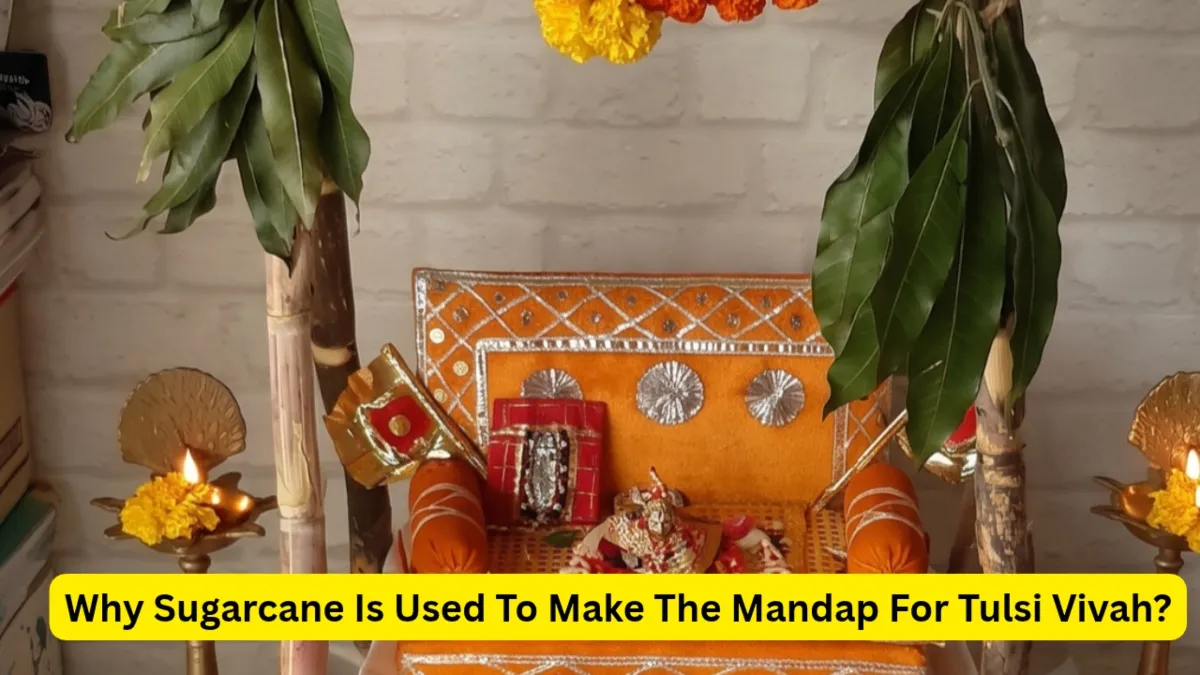
During Tulsi Vivah, the ceremonial wedding of the holy Tulsi plant to Lord Shaligram, a mandap is made using four tall stalks of sugarcane. This ritual takes place on Dev Uthani Ekadashi or the next day, marking the end of the four-month Chaturmas period and the beginning of the Hindu wedding season.
According to religious belief, the sugarcane represents sweetness, prosperity and gratitude to nature. Let's understand the spiritual, mythological, and seasonal significance behind this sacred tradition.
Why Is the Mandap Made Of Sugarcane?
The tradition of making a sugarcane pavilion (mandap) on Tulsi Vivah holds immense spiritual significance.
1. Symbol Of Goddess Lakshmi And Abundance
In Hindu scriptures, sugarcane is directly associated with Dhanya Lakshmi (one of the Ashtalaxmi), the deity of grain, food and prosperity.
By making a sugarcane mandap, devotees invite the blessings of Goddess Lakshmi into their homes, praying that their lives always be filled with abundance and prosperity.
2. The Weapon Of Kamadeva
According to mythology, the bow of Kamadeva (the deity of love and desire) is made of sugarcane, with a bowstring made of honeybees. Creating the mandap out of sugarcane symbolises a wish for sweetness, love, and harmony in the marriage.
3. Gratitude For The New Harvest Season
Tulsi Vivah falls during the new harvest, particularly for sugarcane crops. According to Vedic traditions, a new crop is consumed by offering the fruits of the harvest first to the divine. Therefore, by offering fresh sugarcane stalks to Lord Vishnu and Goddess Tulsi, people express their gratitude.
Recommended For You
4. Represents Four Pillars Of Life
To create a pavilion, four sugarcane stalks are used that are tied together at the top. They represent the four pillars of life (Purusharthas):
- Dharma (Righteousness)
- Artha (Wealth)
- Kama (Love)
- Moksha (Liberation)
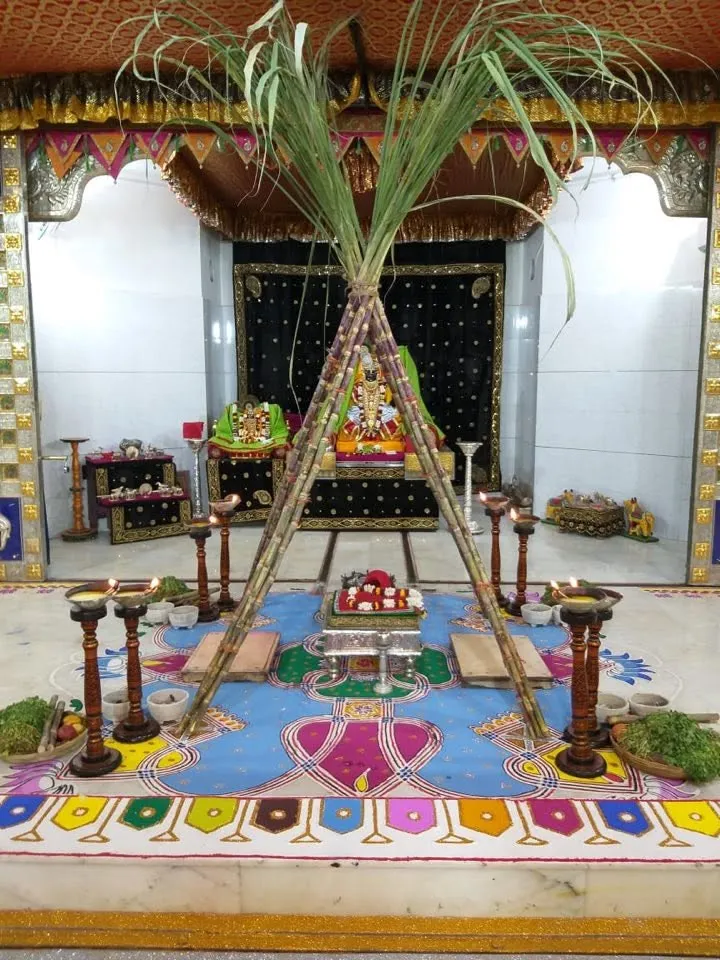
According to religious belief, the sugarcane represents sweetness, prosperity and gratitude (Image: Facebook/shrinathjivadodara)
ALSO READ: Tulsi Vivah 2026: Date, Exact Shubh Muhurat, Puja Vidhi, And Samagri List
Why Tulsi Vivah Is Performed: Mythological Story Behind It
According to the Padma Purana, Goddess Tulsi was, in her previous life, Vrinda, the wife of a demon named Jalandhar. When Lord Vishnu tricked her into defeating Jalandhar, she cursed him, turning Lord Vishnu into Shaligram.
Pleased by her devotion, Lord Vishnu blessed her in return and told her that she would be born as a Tulsi plant, worshipped in every home, and he promised to marry her each year in that form.
Tulsi Vivah thus marks the start of the Hindu wedding season. It is believed that those who perform Tulsi Vivah earn the spiritual merit equal to performing Kanyadaan. Praying to Goddess Tulsi and Lord Shaligram brings harmony, happiness, and prosperity to married life.
Tulsi Vivah 2026: Date And Auspicious Timings (Shubh Muhurat
Tulsi Vivah is traditionally observed on the Kartik Shukla Ekadashi or Kartik Shukla Dwadashi.
Event / Detail | Date | Timings |
Tulsi Vivah 2026 | Saturday, November 21, 2026 | — |
Dwadashi Tithi Begins | Saturday, November 21, 2026 | 06:31 AM |
Dwadashi Tithi Ends | Sunday, November 22, 2026 | 04:56 AM |
Abhijit Muhurat (Auspicious Window) | Saturday, November 21, 2026 | 11:46 AM – 12:28 PM |
Vijay Muhurat | Saturday, November 21, 2026 | 01:53 PM – 02:35 PM |
Thus, creating a mandap out of sugarcane is more than a decorative element. It represents happiness, prosperity, sweetness and harmony in the house and gratitude towards nature.
FAQs
1. What does sugarcane symbolise in Hindu culture generally?
Sugarcane symbolises sweetness, prosperity, fertility, and auspiciousness in Hindu culture.
2. When will Tusli Vivah be celebrated in 2026?
Tulsi Vivah is traditionally observed on the Kartik Shukla Ekadashi or Kartik Shukla Dwadashi. This year, it falls on November 21.
3. How can families perform Tulsi Vivah at home effectively?
By setting up a mandap, gathering materials, and performing important rituals, a person can perform Tulsi Vivah at home effectively.